Last updated on September 10th, 2026 at 05:11 pm
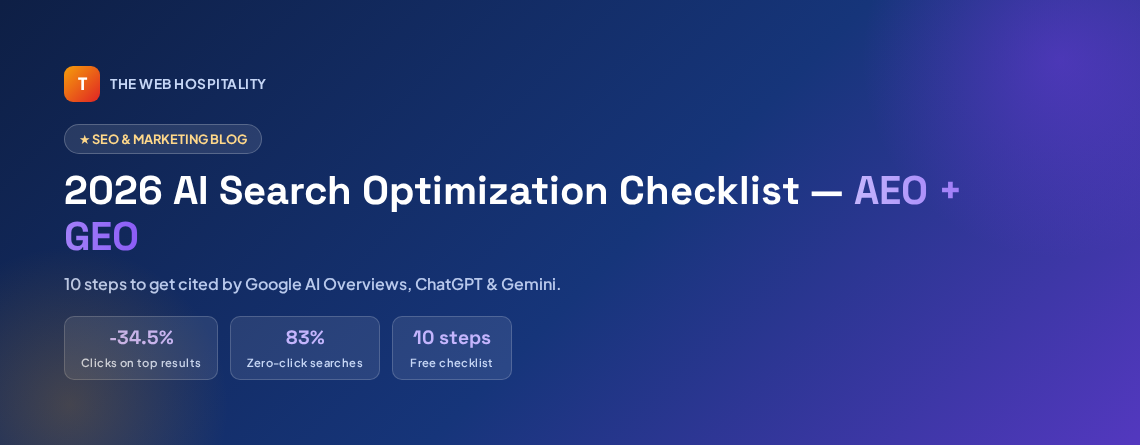
AI search optimization (AEO + GEO) is the process of structuring your content so AI systems — Google AI Overviews, ChatGPT, Gemini, and Perplexity — can understand, trust, and cite it. In 2026, Google AI Overviews reduce clicks on the top organic result by an average of 34.5%, and 83% of searches with an AI Overview result in zero clicks. If your content is not answer-ready, you are invisible in the fastest-growing part of search.
This checklist gives you every step — from content structure to schema to brand signals — to get your pages cited by AI answers instead of skipped by them.
What Is AEO and GEO in 2026?
Answer Engine Optimization (AEO) targets direct answers: featured snippets, “People Also Ask” boxes, and voice search. Generative Engine Optimization (GEO) goes further — it optimizes content so large language models (LLMs) can extract, summarize, and cite it inside AI-generated answers. In practice, the two work together: answer-first content that is factual, structured, and machine-readable.
AI Search Optimization Checklist 2026
Work through these 10 steps on every page you want AI to cite:
1. Answer the question in the first 50 words
AI systems extract the first clear definition or answer they find. Put the direct answer in your opening paragraph — before any fluff. If a user asks “what is GEO?”, your first 50 words should answer it.
2. Use question-based H2 and H3 headings
Structure headings as real questions: “How does Google AI Overview work?” or “What schema helps AI citations?” — LLMs and featured snippets both prefer question-led sections.
3. Add citable statistics with sources
AI answers love numbers with attribution. Include specific stats with “according to” phrases. Example: According to Evergreen Media, AI Overviews reduce organic clicks on the top result by an average of 34.5%.
4. Implement schema.org structured data
FAQ, HowTo, Article, Organization, and Review schema helps search engines and LLMs interpret your content. Add FAQPage schema to every question section — it directly feeds AI answer extraction.
5. Build topical authority with content clusters
AI favors sites that cover a topic comprehensively. Create tightly linked clusters: one pillar page + supporting pages, all interlinked. Internal links signal depth and help AI map your expertise.
6. Keep entity clarity — say who you are and what you do
LLMs think in entities and relationships, not keywords. State your brand, your niche, and your expertise clearly in About pages and article intros. Consistent naming across your site builds entity trust.
7. Publish evidence-based, original content
Generic AI-generated filler is losing visibility. First-party data, original research, screenshots, and expert quotes give AI systems a reason to cite you over competitors.
8. Refresh content regularly
Freshness signals tell AI your information is current. Update statistics, dates, and examples on your top pages every 3-6 months — and note the update on the page.
9. Earn brand mentions and digital PR
Even without links, LLMs recognize brand mentions across the web. Listings in directories, review sites, and press coverage all improve your chances of being surfaced by AI.
10. Test your content with AI prompts
Ask ChatGPT, Gemini, or Perplexity questions about your topic. If your brand or content is not mentioned, revisit structure, schema, and authority signals. Test monthly.
Key Statistics for AI Search (2026)
| Statistic | Source |
|---|---|
| AI Overviews reduce clicks on top results by 34.5% on average | Evergreen Media |
| 83% of searches with an AI Overview result in zero clicks | Exposure Ninja |
| Navigational AI Overviews grew from 0.74% to 10.33% in under a year | Semrush |
| AI Mode queries are 2-3x longer than traditional searches | Google (Sundar Pichai) |
| Google AI Mode available to all US users since May 2025 | Google Blog |
AEO vs GEO vs SEO: What Is the Difference?
| Type | Target | Goal |
|---|---|---|
| SEO | Google blue links | Rank pages in organic results |
| AEO | Featured snippets, PAA, voice | Own the direct answer |
| GEO | AI Overviews, ChatGPT, Gemini | Get cited inside AI answers |
Frequently Asked Questions
What is AI search optimization?
AI search optimization (AEO + GEO) is the practice of structuring content so AI systems like Google AI Overviews, ChatGPT, and Perplexity can understand, trust, and cite it in their answers.
What is the difference between AEO and GEO?
AEO (Answer Engine Optimization) targets direct answers like featured snippets and voice search. GEO (Generative Engine Optimization) optimizes content for citation inside AI-generated answers from LLMs.
Does Google AI Overview affect SEO?
Yes. AI Overviews reduce clicks on the top organic result by an average of 34.5%, and 83% of searches with an AI Overview result in zero clicks. SEOs now need to optimize for AI citation, not just rankings.
How do I get cited in ChatGPT or Google AI Overviews?
Use question-based headings, direct answers in the first 50 words, citable statistics with sources, FAQ schema, and build topical authority through content clusters and brand mentions.
What schema helps with AI search?
FAQPage, HowTo, Article, Organization, and Review schema help search engines and LLMs interpret and attribute your content.
Is GEO the same as SEO?
No. SEO optimizes for search engine rankings, while GEO optimizes for how AI systems extract and cite content. Both matter in 2026 — GEO builds on SEO fundamentals.
How often should I update content for AI search?
Refresh your top pages every 3-6 months with updated statistics, dates, and examples. Freshness signals tell AI systems your content is current and reliable.
What is AI Mode in Google Search?
Google AI Mode is a ChatGPT-like search experience powered by Gemini that answers complex questions with in-depth research. AI Mode queries are 2-3 times longer than traditional searches.
Conclusion: Optimize for the AI, Not Just the Algorithm
Search is no longer a list of blue links. In 2026, the fastest-growing way users find answers is through AI systems that summarize, cite, and decide. The sites that win are the ones AI can understand, trust, and reference.
Start with this checklist: answer-first structure, question headings, citable stats, schema, topical clusters, and brand authority. Test your visibility with AI prompts monthly — and keep your top pages fresh.
Use our free spam score checker and DR checker to audit any domain, and check link exchange for free backlinks while you build your AI visibility.